


|
||
|
|
||
|
||
|
A message from Joy Allen, Durham Police and Crime Commissioner: Listening, Learning and Acting: Democracy in Action. |
||
|
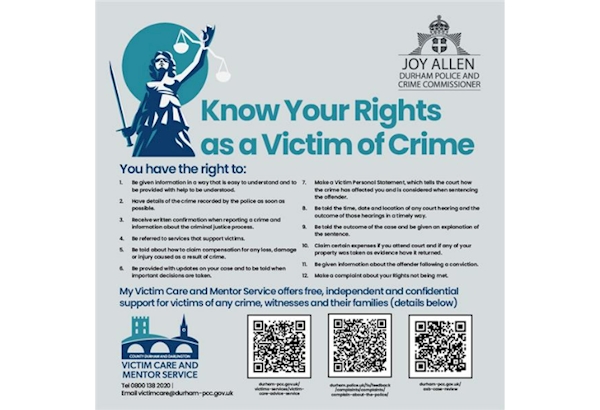
One of the most important parts of my role as Police and Crime Commissioner is listening directly to the people I serve. While crime statistics, performance reports and survey data all play an important role in helping us understand local issues, nothing replaces hearing first-hand from residents about their experiences, concerns and expectations of policing and the wider criminal justice system. That is why I have been attending a series of joint public engagement surgeries with your local Members of Parliament across County Durham and Darlington. These sessions provide an opportunity for residents to raise concerns, seek advice and share their experiences directly with those elected to represent them. They also allow us to identify recurring themes, spot emerging issues and ensure that local voices help shape local priorities. Importantly, they demonstrate the value of partnership working. Crime and community safety challenges rarely sit neatly within the responsibilities of a single organisation. By bringing together MPs, Police and Crime Commissioner, Durham Constabulary and wider partners where appropriate, we can often resolve issues more quickly and ensure residents receive the support they need. One theme that has emerged consistently from these discussions is a lack of awareness among victims about their rights under the Victims’ Code. Many people have told us they were unaware of the support available to them following a crime, while others were not aware they could access specialist victim services regardless of whether a crime resulted in a charge or conviction. This is concerning because every victim has rights, including the right to be kept informed, the right to access support services and the right to be treated with dignity, respect and compassion throughout the criminal justice process. My Police, Crime and Justice Plan 2025-2029 places victims at its heart, with a clear commitment to delivering a first-class service to victims and ensuring that those affected by crime receive the support they deserve. The concerns raised through these surgeries reinforce why evidence-led, intelligence-informed and data-driven problem solving is so important. Individual cases often reveal wider trends. By listening carefully to residents, analysing data and working closely with partners, we can identify where systems are not working as intended and take action to improve them. For anyone who feels they have not received the service they should expect, there are routes available to seek answers and accountability. Concerns about the conduct of a police officer or member of police staff can be raised through Durham Constabulary’s Professional Standards Department. Information on how to make a complaint is available via Durham Constabulary’s website (see details below) If a victim believes their rights under the Victims’ Code have not been met, they can also request a review or raise concerns through the Victims’ Right to Review Scheme, where applicable, or seek advice from my specialist victim services. My Victim Care and Mentor Service offers free, independent and confidential support for victims of any crime, witnesses and their families (details below) Public engagement should never be a tick-box exercise. It should be about listening, learning and acting. The issues raised during these surgeries are helping inform decisions, shape priorities and improve services. Most importantly, they ensure that the voices of local people remain at the heart of everything we do as we work together to build safer, stronger and more resilient communities. https://www.victimcareandadviceservice.uk/
| ||
Reply to this message | ||
|


|